
The why, what, and when of the PSAT
What is the PSAT/NMSQT?
The Preliminary SAT/National Merit Scholarship Qualifying Test (PSAT/NMSQT) is a digital exam that mirrors the SAT in terms of content, structure, and scoring. For 11th graders, the PSAT also determines eligibility for the National Merit Scholarship Program. Students who score among the very top test-takers in their state (about the top 1%) become National Merit Semifinalists, and about 7,500 of these students nationwide are ultimately named National Merit Scholars after an application process.
Why are there different versions of the PSAT?
- PSAT 8/9 – designed for 8th and 9th grade students. The questions are more accessible, reflecting what students at this grade level are learning.
- PSAT 10 – if offered, this one is given in the spring of 10th grade. It is identical in format and difficulty to the PSAT/NMSQT but does not qualify students for the National Merit program.
- PSAT/NMSQT – taken by 10th and 11th graders in the fall (October). Only 11th grade scores count toward National Merit recognition.
Are the PSAT and SAT the same test?
Not exactly, though they are very similar:
- Both are digital tests delivered through the College Board’s Bluebook app.
- The PSAT is shorter (about 2 hours) than the SAT (about 2 hours, 14 minutes).
- The PSAT is scored out of 1520; the SAT is scored out of 1600.
- The PSAT is slightly easier, especially in math.
Where and when will I take the PSAT?
The PSAT/NMSQT is administered through high schools each October. Schools can choose from several weekday or Saturday test dates. Most students do not need to register individually — your high school usually handles registration.
Instead of a paper prep booklet, you’ll prepare and test in the Bluebook app, which runs on school-managed laptops or tablets (most often Chromebooks). Practice materials are available in the app and through Khan Academy.
How much does the PSAT cost?
The PSAT costs $18, but whether you pay depends on your school. Some schools cover the cost, while others may bill students directly. Fee waivers are available for eligible students.
How should I prepare for the PSAT?
- First, don't worry too much about this test! The scores are only for you and your school counseling office. Use the PSAT to help you to understand how much test prep you might want to do in order to prepare for the SAT. You can also:
- Practice in Bluebook. Download the app and try the built-in practice tests so you know exactly how the real test will look.
- Use Khan Academy. The College Board partners with Khan Academy for free practice tailored to your strengths and weaknesses.
Who sees my PSAT scores?
- If you are an 11th grader and score highly enough, your results are sent to the National Merit Scholarship Corporation.
- Otherwise, your scores are shared only with you, your family, and your school.
- Colleges do not receive your PSAT scores.
What kinds of questions are on the PSAT?
The PSAT has two main sections:
- Reading and Writing – 64 minutes, about 54 questions
- Math – 70 minutes, about 44 questions
Each section is broken into two adaptive modules. The first module contains a mix of easy, medium, and hard questions. Your performance determines the difficulty level of the second module.
Questions are mostly multiple choice, with a few math “grid-in” items requiring you to type a numerical answer.
Should 9th and 10th graders take the PSAT in October?
It depends. The PSAT includes math concepts through Algebra 2. Students who have already studied or are currently studying Algebra 2 may benefit from the practice. For others, the test might feel unnecessarily difficult.
Can I get extended time on the PSAT?
Yes. If you qualify for testing accommodations through College Board’s Services for Students with Disabilities (SSD), those apply to the digital PSAT as well.
So really, why take the PSAT?
- Some schools require 11th graders to take it.
- It’s great practice for the digital SAT.
- It can help you decide whether the SAT or ACT feels like a better fit for your testing style.
Must I? The concept of the PSAT causes me great stress.
In short, you don’t need to. The PSAT, however, is a truly low-stakes way to practice a timed standardized test in a way that might be very helpful for your eventual college process.

To SAT? Or, to ACT? How do you pick?
The stress around standardized testing has not gone away despite the shifts that many schools have made toward test-optional admissions. In fact, for some students, the stress around standardized testing seems to have only increased as they consider how to maximize their scores to submit to schools that are test-optional (particularly when those schools seem to have a preference for students to submit high test scores). The specifics around whether “test-optional” really means OPTIONAL is a subject for another blog post. Today, let’s talk about the SAT and the ACT, how they are alike, how they diverge, and how you might be able to choose which test to take without going through the onerous challenge of sitting for both.
First, at the root, the SAT and the ACT really are very similar tests.
Both the SAT and the ACT focus on testing a student’s ability in the key areas of reading, writing, and math. They both ask students to solve problems, read passages, select among multiple-choice answers, and interpret information at a similar level of difficulty. Both the SAT and the ACT provide a standardized means of comparing students despite vastly different high school curriculums and experiences. Contrary to some outdated assumptions, neither the SAT nor the ACT has a “guess penalty” – which means that students should make a guess and answer every question on the test.
The really good news? Most students who take both tests receive a pretty similar score (percentile-wise) on each one.
Despite this, there are some key differences between the SAT and the ACT which might help students decide which test is the “right” test for them.
First, the ACT is a faster-paced test – students are required to answer more questions, per minute, on the ACT than they are on the SAT.
For example –
ACT math = 60 questions, 60 minutes (1 minute per question)
SAT math = 58 questions, 80 minutes (1:23 per question)
ACT English = 75 questions, 45 minutes (36 seconds per question)
SAT writing & language = 44 questions, 35 minutes (48 seconds per question)
ACT reading = 40 questions, 35 minutes (52 seconds per question)
SAT reading = 52 questions, 65 minutes (1:15 per question)
* Note: This applies to the paper-based SAT. The digital SAT (releasing in 2024) will be a shorter test.
SO – If you are a quick processor, someone who often finishes tests in school ahead of the allotted time, the ACT might be a better choice for them. If you prefer to work more slowly through information, or often find yourself using every minute of allotted time, the SAT might be a better fit.
Second, the ACT has a science section. (The SAT does not!)
The science section of the ACT does not really test science concepts. It is really more about logic problems and graph reading. Take a look at this real ACT science question:
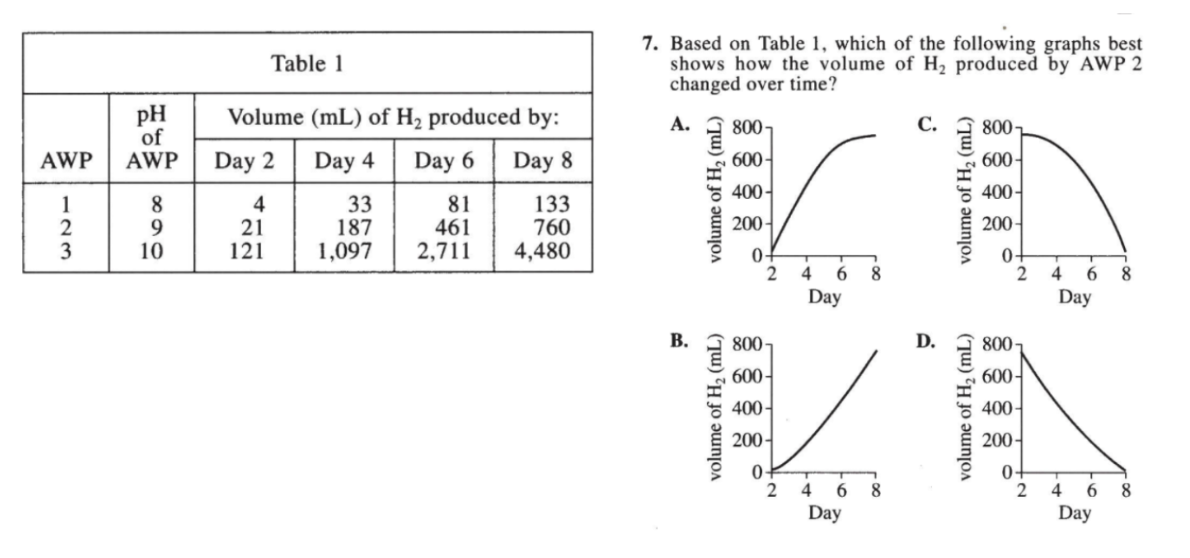
What do you think? Does the graph make your head spin? Or does this look like an easy question? (The answer is “B”.) If graph reading is not your thing, no worries, the SAT might be the test for you!
The SAT reading passages tend to be a bit longer, and tricker.
Do you love to read? How’s your vocabulary and ability to parse difficult passages? If you are a bookworm, or someone who loves getting lost in words, the SAT might be a more appealing test for you. Take a look at this real SAT reading passage:
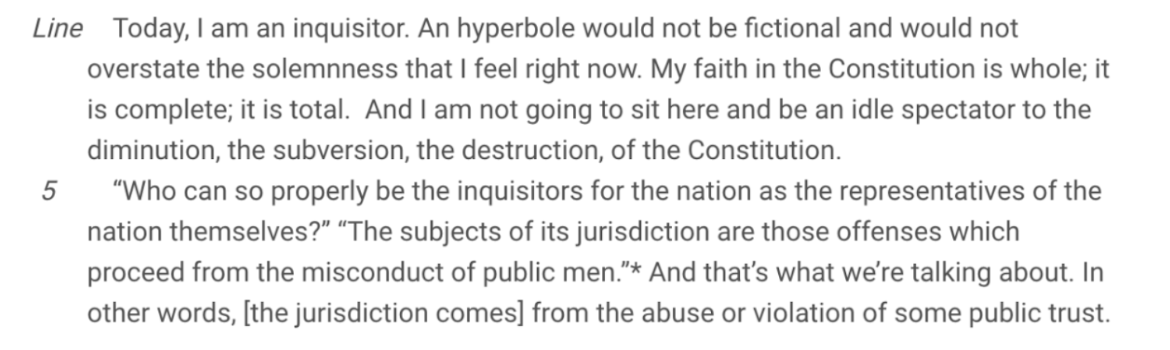
What did you think? If this makes sense to you, maybe the SAT is a good fit test! If you felt lost here, perhaps consider the ACT.
Finally, the SAT has both a “calculator” and “no calculator” math section (only until 2024). For now, the SAT has one math section where students must rely on their mental math abilities. If mental math is not your thing, consider the ACT. However, when the SAT becomes all digital in 2024, the no calculator math section is going away.
The good news? Most of these differences between the tests will continue to be true, even after the SAT switches to digital testing in January 2024. Use some of these guiding questions to decide which test might be a better option for you! And no matter what you select, practice practice practice! There really is no better way to prepare than to be prepared!
